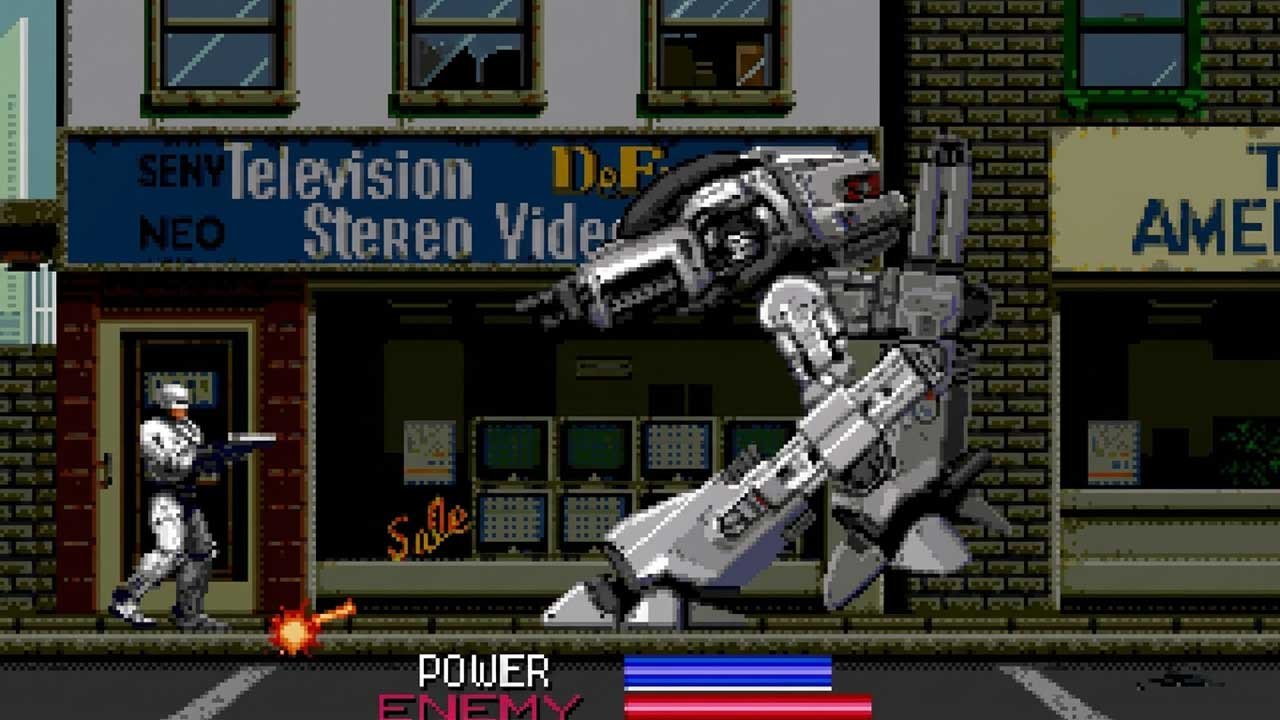
In the late 1980s and early 1990s, SEGA marketed the Mega Drive / Genesis under a bold promise: “Bring the Arcade Experience Home.” While accurate arcade ports became the 16-bit console’s ultimate selling point, one of the biggest arcade hits of the era was left out of the party. The legendary Data East arcade game RoboCop (1988) received numerous 8-bit home conversions—which often suffered from severe hardware limitations—but the Mega Drive never got the official port it deserved.
The RoboCop MD project was built to rewrite that history.
The 1990 Christmas Dream
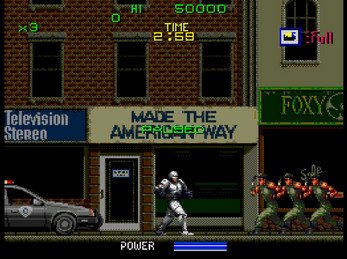
Engineered to replicate the exact feel of an official cartridge release from 1990–1991, RoboCop MD aims to be the ultimate conversion tailored for the iconic “High Definition Graphics” model of the Genesis. The homebrew port pairs fast-paced action and sharp pixel art with a soundscape designed to push the original console hardware to its limits.
| Hardware Specification | Project Details |
| Target Platform | SEGA Mega Drive / Genesis (NTSC 60Hz) |
| Engine & Development Tools | SGDK (Sega Genesis Development Kit), LibreSprite, tiledpalettequant |
| Sound Chip Optimization | Yamaha YM2612 (Pure FM Synthesis) |
| Distribution Format | Free at launch (Playable Demo Available) |
| Hardware Compatibility | Original Hardware (EverDrive), MiSTer FPGA, Emulators (BlastEm, RetroArch) |
Behind the Scenes & Development
What began as a solo passion project by developer Boca (Boca’s Retro Stuff)—aimed at fulfilling a childhood dream and learning C programming for the Mega Drive using SGDK (leveraging AI assistance to streamline code)—gained serious momentum with a key addition to the team. Italian producer, composer, and musician LukeMcQueen joined the project to handle the audio engine.
LukeMcQueen arranged the legendary arcade soundtrack specifically for the Mega Drive’s YM2612 sound chip, pumping out heavy basslines and sharp FM synths that give RoboCop MD the polish of a golden-era commercial release.
The development process also received visual and gameplay consultation from notable retro
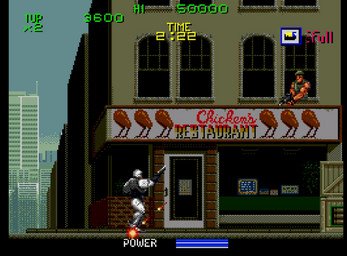
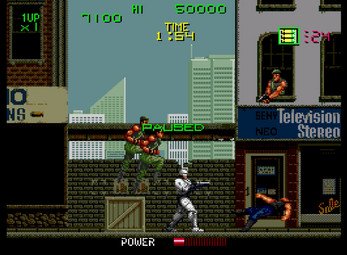
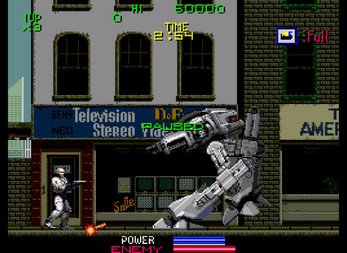
How to Play the Demo
The project is currently in Work in Progress (WIP) status, meaning color balancing, audio mixing, sprite art adjustments, and bug fixes are actively being deployed. However, a fully playable demo build is available for download and testing.
Installation & Setup
- Download: Grab the binary ROM file (
robocop-md-v0.1.0-demo1-ntsc.bin— 1.1 MB). - Launch: Load the
.binROM file into your chosen Genesis emulator or flash cartridge.
Emulator & Hardware Compatibility
- Primary Recommendation: BlastEm (Available for Windows, Linux 64-bit, and Linux 32-bit for accurate hardware-level execution).
- Alternative Platforms: Tested and verified on RetroArch cores, original SEGA hardware via EverDrive, and MiSTer FPGA.
- Regional & Frequency Requirements: Built natively for NTSC 60Hz systems. While playable on PAL consoles, running this build on PAL will result in altered game speed and display ratio misalignment.
Project Credits
- Core Lead, Graphics Touch-ups & SFX Implementation: Boca’s Retro Stuff
- Sprite Ripping & Adaptation: Extracted by cycriccizer, jin315, Yawackhary, and DMM069; manually adapted from the arcade original by Boca’s Retro Stuff.
- Sound Effects (SFX): Ripped from the original arcade via M1 by Arbee.
- Music Composition & YM2612 Arrangement: Luke McQueen.
- Art & Gameplay Consultants: Monster Bath Games (DMM069), Ray Castello, and Master Linkuei.
- Engine & Dev Tools: SGDK (Development Engine), LibreSprite (Sprite editing via MAME captures), and tiledpalettequant (Base palette conversion tool for manual retouching).
Legal Notice: RoboCop is a registered trademark and copyright of Amazon Metro-Goldwyn-Mayer (MGM) / Orion Pictures. The original 1988 arcade title is © Data East Corp. (property of G-Mode Co., Ltd.). This ROM is an unofficial fan creation with no commercial affiliation, containing zero reverse-engineered code or assets from official commercial releases.