
NVIDIA rolls out its new 3D-Guided Neural Rendering update, bringing massive performance gains, new game support, and modding tools.
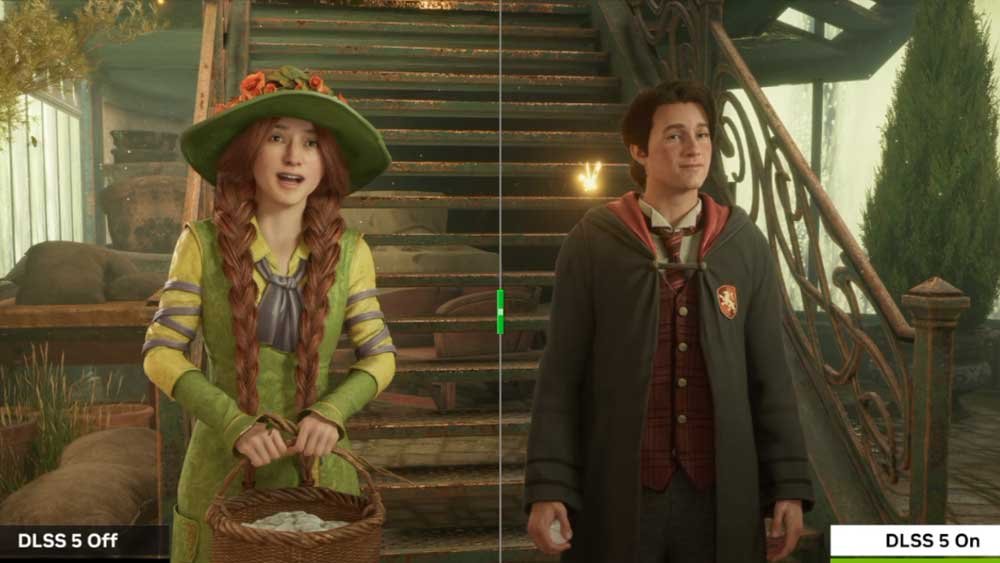
NVIDIA has officially unveiled the next evolution of its DLSS 5 tech. Powered by a new 2X faster 3D-Guided Neural Rendering model, the update targets higher frame rates, smaller VRAM footprints, and support for high-profile titles like Hogwarts Legacy and Where Winds Meet.
DLSS 5 arrives in Hogwarts Legacy on November 5! 🪄 NVIDIA has toned down the visual changes to reduce the performance hit, but did they go a little too far?Check out the comparison below. Would you keep it ON, or is the difference too small to matter? 🤔🔗 https://t.co/IAyTOIZUPK
— QG Reloaded | Gaming News & Tools (@QGReloaded) October 14, 2026
The rollout begins October 16th for NVIDIA RTX Spark laptops and NBA 2K27, followed by major releases for classic game modders and open-world RPG fans throughout November.
Faster Performance with a 24% Smaller Footprint
NVIDIA’s original DLSS 5 launch introduced AI-generated lighting and realistic material reconstruction. However, heavy GPU overhead proved challenging for mid-range setups.
The new October update addresses performance head-on:
- 2X Faster Execution: Neural model optimizations double rendering speed compared to last month’s build.
- Reduced VRAM Usage: The model’s parameter footprint drops by 24% (down to ~118M parameters), saving 20% VRAM at 4K resolution.
- 10X Total Gain: Overall performance is now 10X faster than when DLSS 5 was first announced in March.
Shopping for an upgrade? Check out the latest GeForce RTX 50 Series GPUs on Amazon to get your rig ready for DLSS 5.
Hogwarts Legacy & Where Winds Meet Get DLSS 5
Two massive titles are heading the next wave of neural rendering integrations:
- Hogwarts Legacy (November 5th): Warner Bros. Games and Avalanche Software will add DLSS 5 with custom SDK controls to preserve the game’s artistic style.
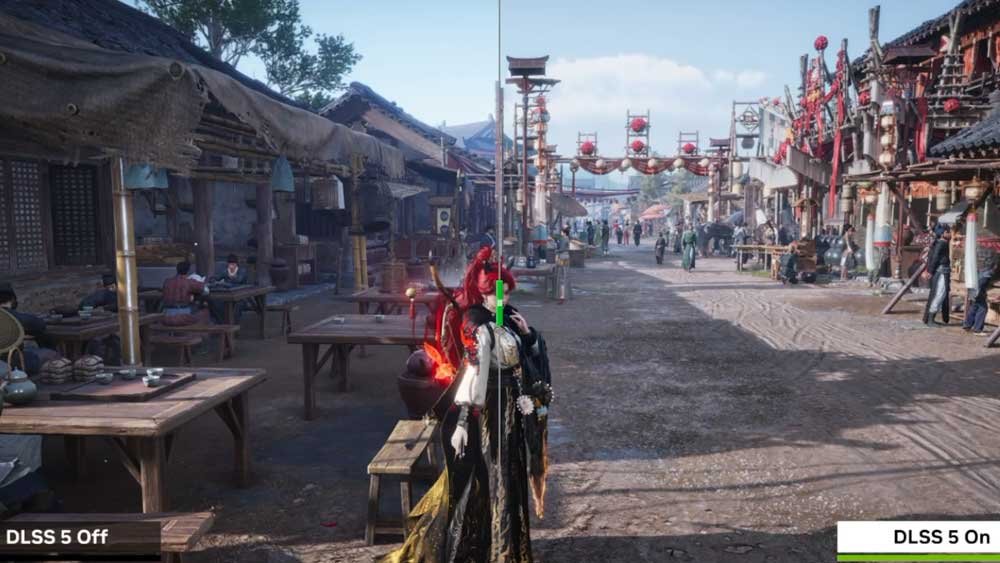
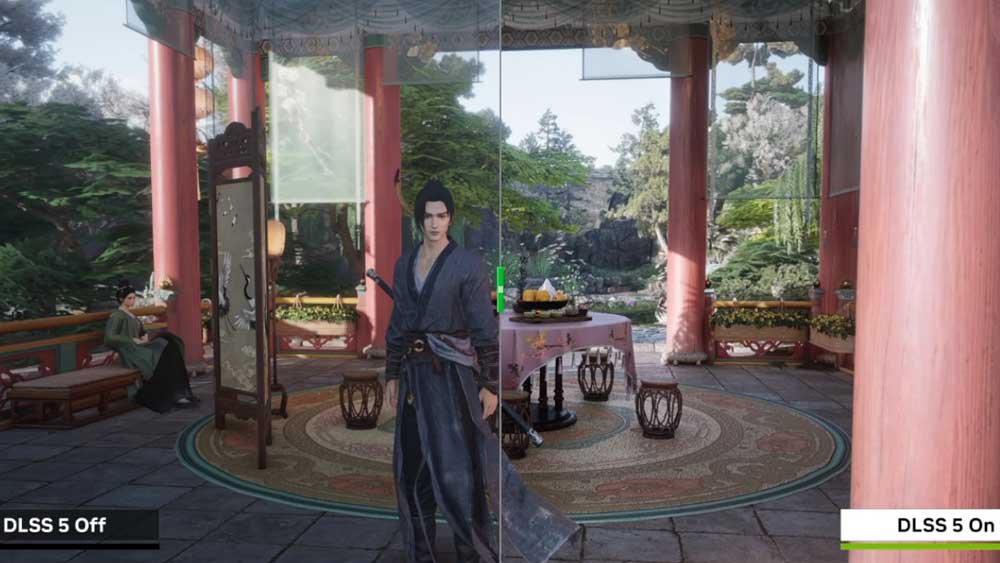
- Where Winds Meet (Late November): Everstone Studio’s Wuxia open-world RPG—which boasts over 100 million players—will receive full 3D-Guided Neural Rendering support.
Does It Look Too Subtle?
Community feedback on early preview images shows mixed reactions. While initial DLSS 5 showcases featured aggressive lighting overhauls, the Hogwarts Legacy implementation appears significantly toned down.
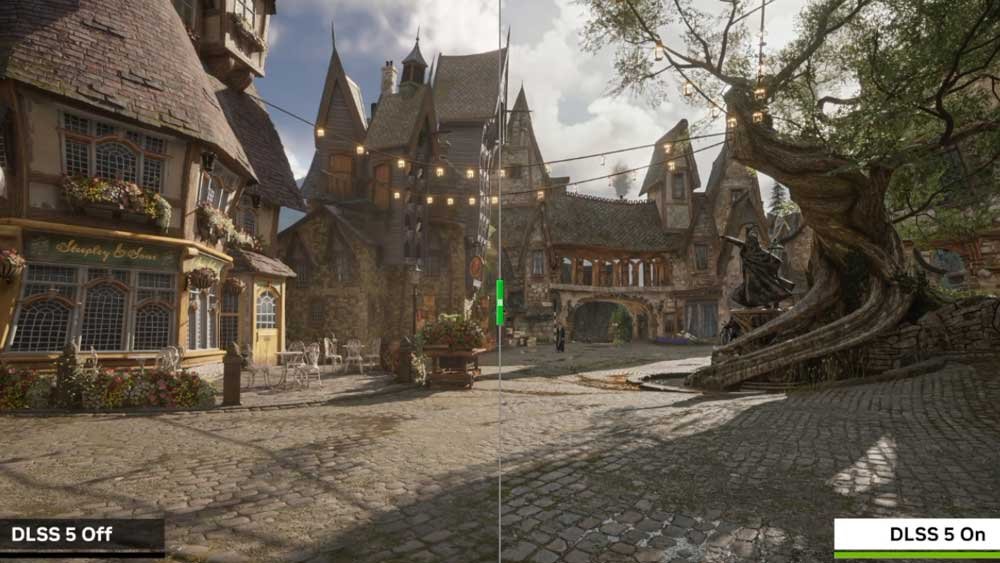
The update adds subtle contact shadowing and realistic depth, though some fans note the differences are hard to spot during fast-paced gameplay and come with a slight color palette shift. For gamers concerned about performance overhead, deciding whether to toggle DLSS 5 ON or OFF will likely come down to individual GPU headroom.
New Frame Gen Performance Mode & RTX Remix Tools
NVIDIA is also giving players and modders more control over frame rate generation and classic game remasters:
Beta Preset C for Frame Generation
Available now via the NVIDIA app beta update, a new “Performance Mode” (Preset C) replaces the secondary optical flow AI model with a lighter algorithm.
- Up to 35% Faster: On GPUs like the RTX 5060, frame generation receives a massive speed boost with minimal visual trade-offs.
RTX Remix Integration (October 23rd)
Modders using NVIDIA RTX Remix will get full access to DLSS 5 and Preset C, opening up new possibilities for enhancing classic PC games with modern rendering technology. Early previews showcase notable path-tracing improvements in community projects like Fallout 4 RTX and Mirror’s Edge RTX, with enhanced ambient occlusion, more realistic lighting, and accurate material reflections. These improvements can make familiar environments feel more detailed and immersive without requiring entirely new games.
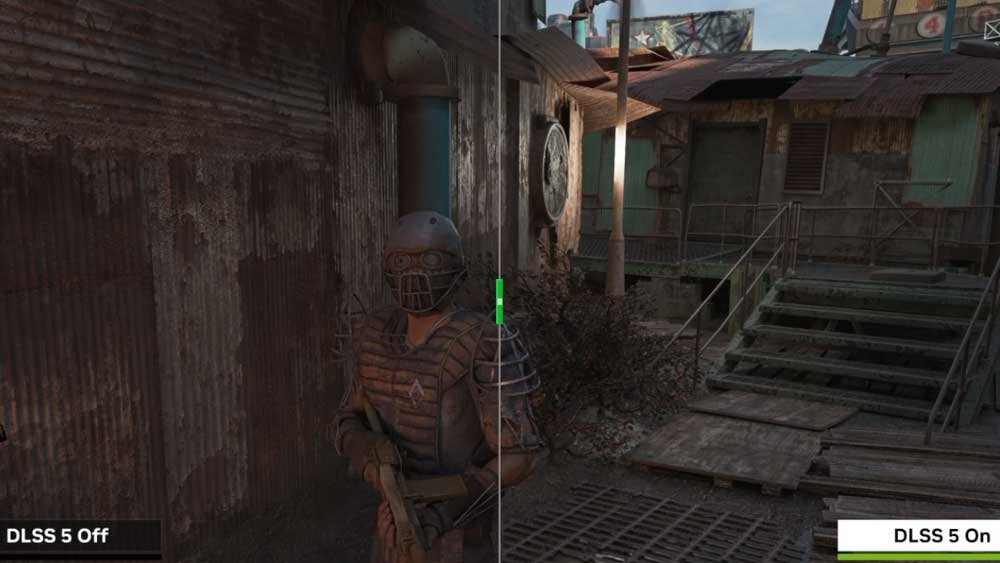
RTX Remix continues to give the modding community powerful tools to revisit older titles and push their visuals further. With DLSS technology becoming increasingly accessible, these projects could offer a glimpse of how AI-assisted rendering will shape the future of PC gaming.
What’s Next?
With over 1,000 supported games and apps across the DLSS ecosystem, NVIDIA continues to push AI-driven graphics performance forward. As more developers adopt the lighter DLSS 5 SDK, players can expect additional game announcements and potential improvements to existing titles as 2027 approaches.
The growing adoption of these tools could also make advanced rendering techniques more accessible to smaller development teams and independent creators. However, the real impact will depend on how well developers implement the technology and how much visual improvement players can expect without sacrificing performance. For PC gamers, the coming months should offer a clearer picture of how NVIDIA plans to expand its AI-powered graphics ecosystem.