
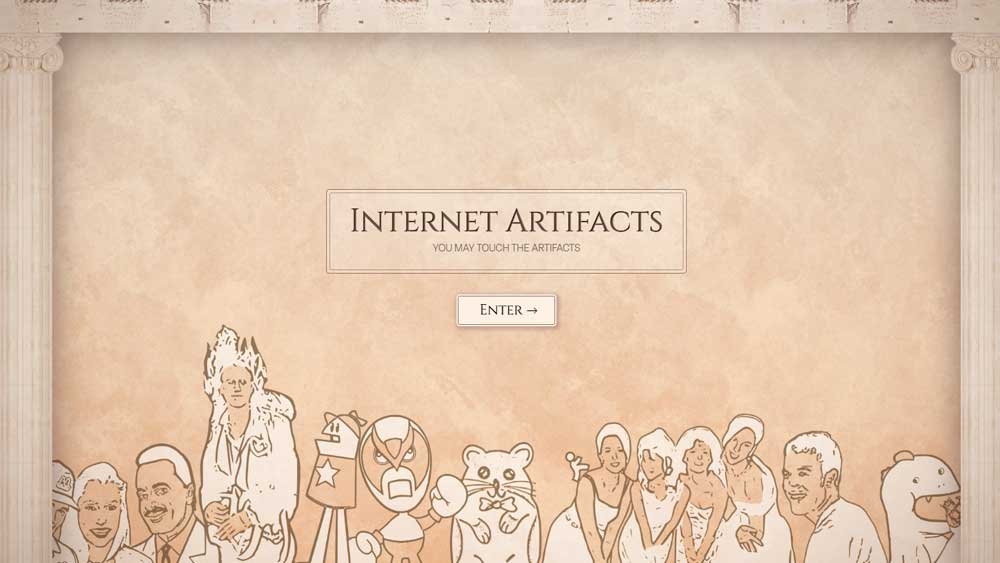
Neal Agarwal’s latest project lets you click through 57 milestones of early web culture, from a 1977 ARPANET map to the first iPhone announcement.
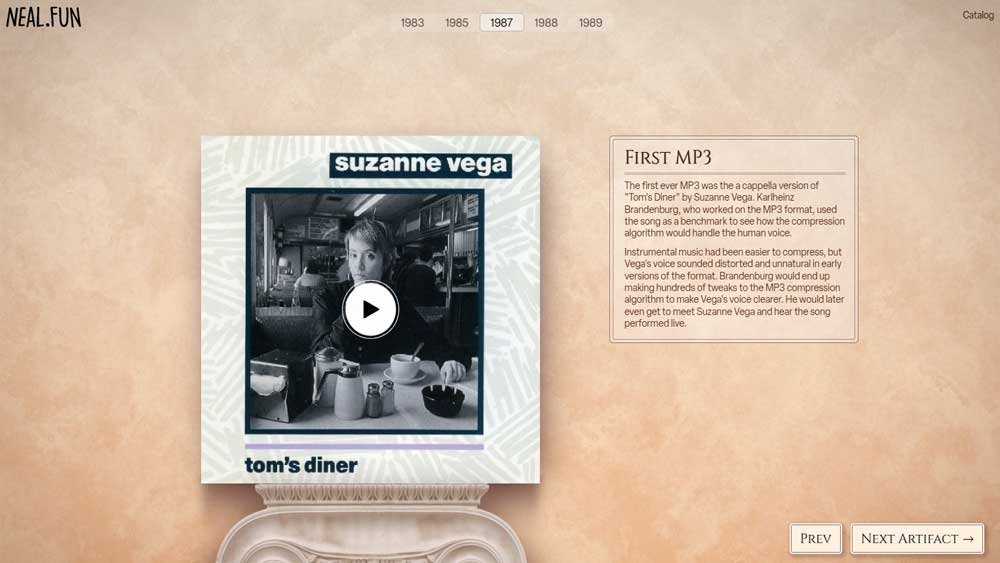
If you’ve ever wanted to see the internet’s baby pictures, Internet Artifacts is the closest thing to a photo album the web has. Created by Neal Agarwal, the developer behind viral hits like The Deep Sea and The Password Game, the site works as an interactive timeline of 57 milestones from the internet’s early decades. It opens with a 1977 map of ARPANET, the Department of Defense network that predated the modern internet, and closes in 2007 with Steve Jobs unveiling the first iPhone. What makes it stand out isn’t just the list of dates, it’s that many of the entries are fully interactive recreations, not just screenshots, built using old browser and Flash emulation to let you actually click around inside them.
A Few Highlights Worth Clicking
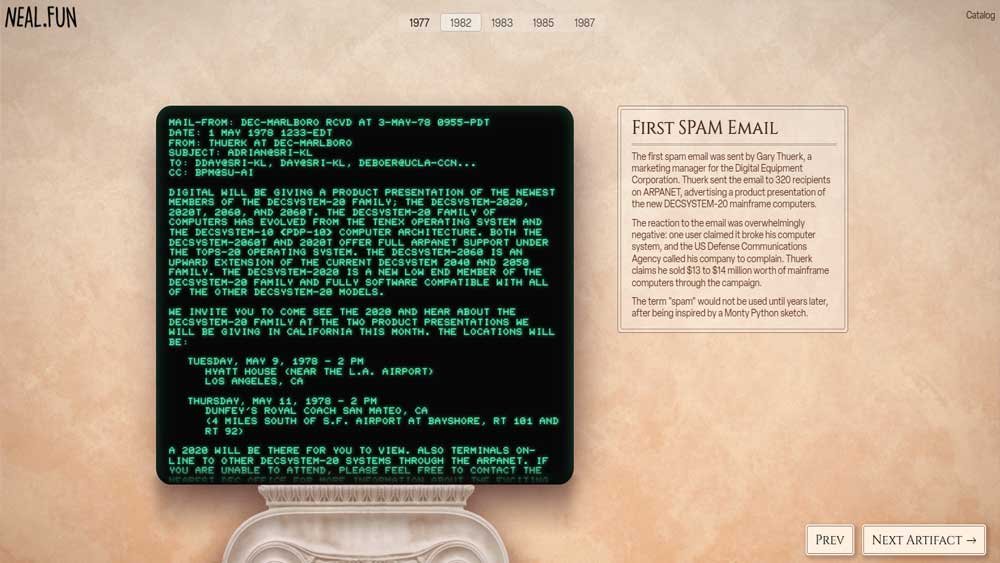
Some of the artifacts feel like trivia night gold. The exhibit includes the first spam email ever sent, which predates most people’s estimate by years, and the first emoticon, a simple :-) proposed by computer scientist Scott Fahlman back in 1982 (he also suggested a :-( for anything serious). There are early homepages for Apple, Google and Wikipedia, exactly as they looked the day they went live, plus the unmistakable screech of an AOL dial-up connection, triggered with a single click on the “Sign On” button.
🖥️ Feeling the nostalgia? A retro-style mechanical keyboard makes browsing old internet history hit even harder.
Why This Kind of Project Matters
Most of the early web simply isn’t archived. The Internet Archive’s Wayback Machine only started crawling sites in 1996, meaning the internet’s first five years are largely undocumented, a gap that projects like this help close, even in a playful format. Internet Artifacts joins a small but growing wave of efforts to preserve early digital culture before it disappears for good, alongside physical exhibitions like London’s “64 bits,” which displays vintage hardware running period-accurate software. The difference is that Agarwal’s version lives permanently online, free, and just a click away.
Worth a Visit
Internet Artifacts isn’t a game and it doesn’t have a score to chase, it’s closer to a museum you wander through at your own pace, one artifact at a time. Whether you were there for the dial-up era or you’re discovering it for the first time, it’s a rare piece of the internet that treats its own history as worth remembering.
As an Amazon Associate, QG Reloaded earns from qualifying purchases.