
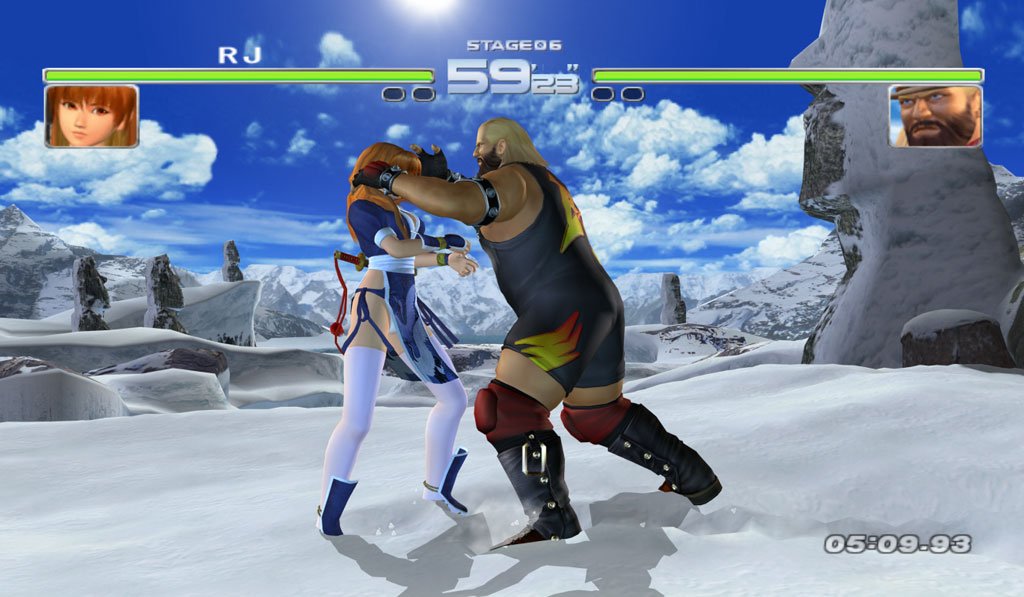
When Microsoft entered the console market in 2001, it needed a flagship title that could visually demonstrate why the Xbox was superior to its competitors. That title was Dead or Alive 3 (DOA3). Developed by the legendary Team Ninja, the game was not only a commercial hit, but a technological milestone that defined expectations for the sixth generation of home consoles.
An Unmatched Visual Showcase
Even decades after its initial launch, Dead or Alive 3 still manages to impress. It was one of the very first titles to fully harness the Xbox hardware architecture, delivering:
- Multi-Tiered Stages: You were never confined to a flat ring. Players could kick opponents off snow-covered mountain cliffs and seamlessly continue the brawl in the valley below.
- Particle & Weather FX: Snow, rain, and falling leaves moved with dynamic physics that felt truly cinematic for its era.
- Real-Time Lighting: Sweat glistening on fighter character models and dynamic reflections across arena surfaces showcased the sheer power of the console’s custom NVIDIA GPU.
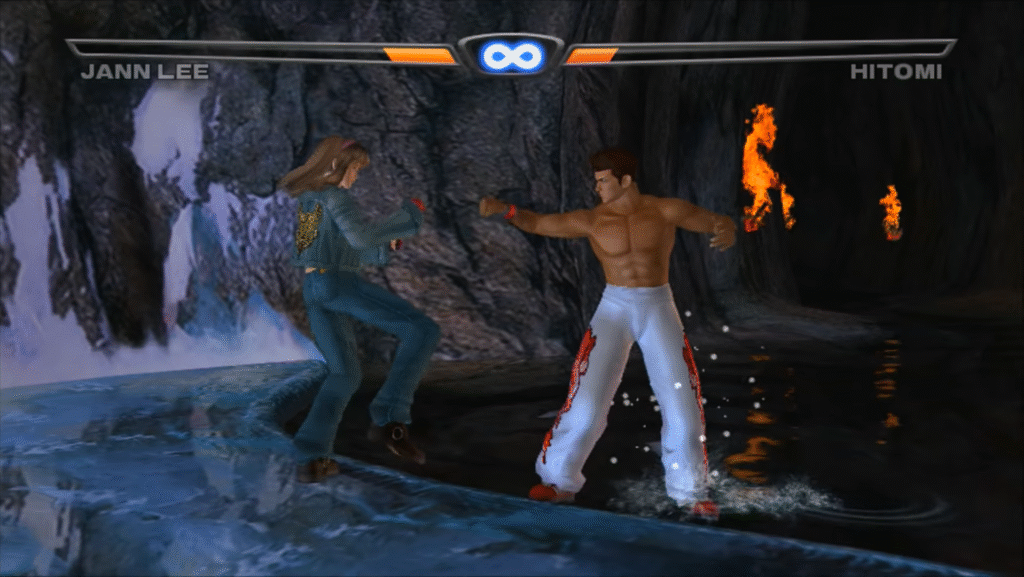
Refining the Signature “Hold” System
The gameplay loop of Dead or Alive 3 is famous for its strict Triangle System: Strikes beat Throws, Throws beat Holds (Counters), and Holds beat Strikes.
The biggest mechanical breakthrough of this third entry was the recalibration of the Hold execution window. Team Ninja narrowed the defensive timing, forcing players to read their opponent’s rhythm rather than button-mashing counter commands—elevating high-level matches into a high-stakes psychological chess game.
Iconic Roster Additions
DOA3 introduced several fighters who quickly became permanent pillars of the franchise:
- Hitomi: The German-Japanese Karate practitioner who quickly became a fan favorite.
- Brad Wong: Introducing the erratic, high-mixup style of Zui Quan (Drunken Fist).
- Christie: The deadly assassin wielding fast, piercing Shequan (Snake Kung Fu) strikes.
- Hayate: Fully playable in his true Shinobi form following his narrative arc in DOA2.
How to Play Dead or Alive 3 Modern Systems
Thanks to Xbox Backward Compatibility, you don’t need 2001 hardware to experience this classic.
If you own an Xbox Series X or Xbox One, simply insert the original Xbox disc or grab the digital version directly from the Xbox Store. The game benefits from automated resolution scaling (up to 4K native on Series X) and locked framerates—delivering the visual crispness of a modern remaster at no extra cost.
The QGR Verdict
Dead or Alive 3 stands as a testament to an era where graphical innovation and raw arcade adrenaline walked hand in hand. It remains an essential download for Xbox owners, whether you are chasing 128-bit nostalgia or analyzing one of the fluid 3D fighters ever built.