
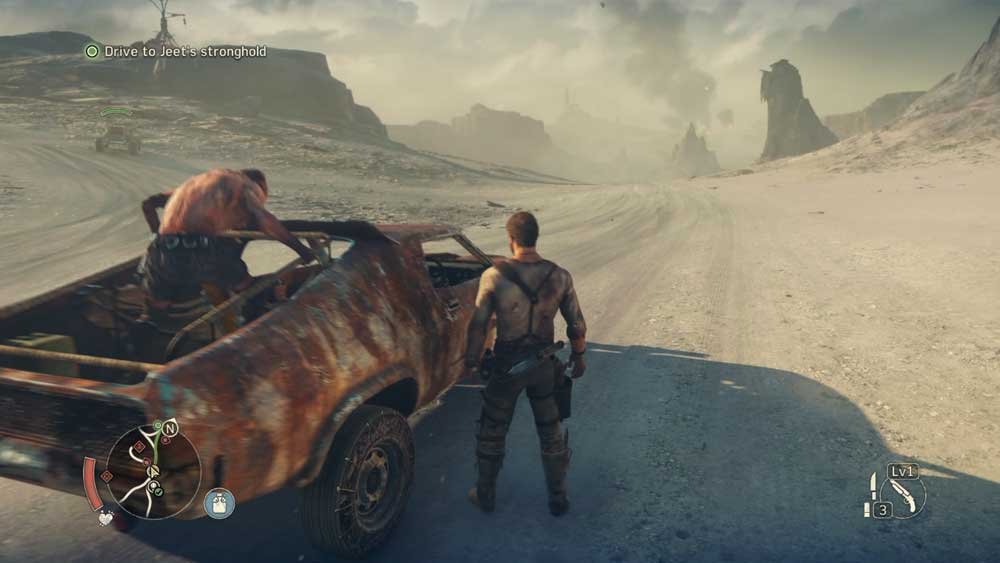
Some games launch, generate noise for a month, and fade into obscurity. Then there are games like 2015’s Mad Max. Originally released by Avalanche Studios, it has weathered the test of time better than most open-world titles of its generation. Far from a lazy movie tie-in, it serves as a masterclass in atmospheric world-building and vehicular combat.
From 8-Bit Dust to Highway Violence: The Evolution of Wasteland Combat
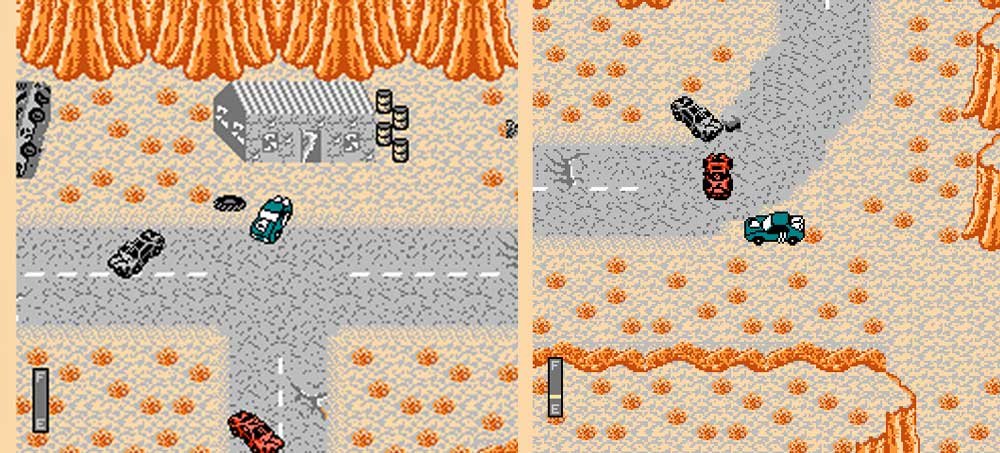
The 2015 game didn’t emerge in a vacuum. The franchise’s history with interactive media dates back to Mad Max (1990) on the NES, developed by Mindscape. That 8-bit adaptation placed players in an overhead perspective, forcing them to manage fuel while navigating arena-style vehicular battles and collecting scrap. Though primitive by modern standards, its core loop—car combat, resource management, and survival—laid the groundwork for the subgenre.
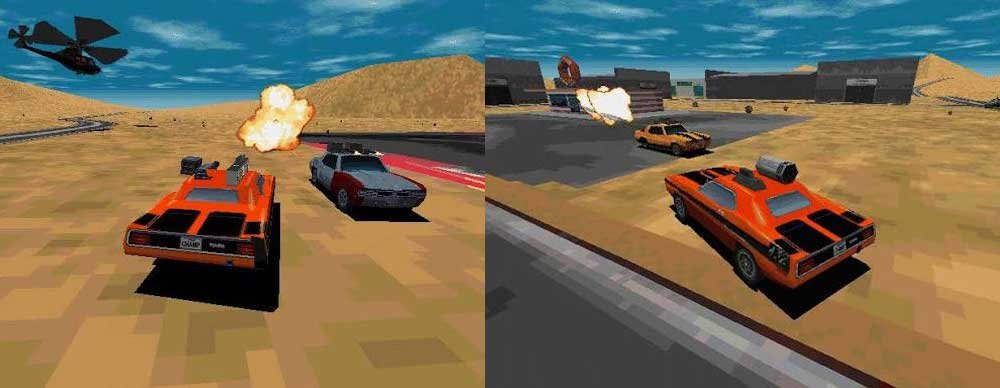
This formula heavily inspired a wave of vehicular action titles throughout the 90s, most notably Interstate ’76 (1997). Activision’s PC classic took the wasteland car-combat concept and infused it with customizable muscle cars, mounted weapons, and intricate physics. Titles like Twisted Metal and Vigilante 8 further refined arena car combat, but 2015’s Mad Max represents the pinnacle realization of this genre: combining open-world survival with high-octane automotive warfare.
Solitude as a Landscape
Many open-world developers fear empty spaces, but Avalanche Studios embraced the void. The wasteland in Mad Max isn’t just a map—it is an oppressive character.
Endless dunes and rusting ship hulls resting in dried-up ocean beds create a hypnotizing visual melancholy. It is a game that understands the power of silence, interrupted only by howling desert winds or the distant roar of a V8 engine[cite: 3].
The Magnum Opus: Machine as the Main Character
The true genius of the gameplay lies not in Max himself, but in his machine. The Magnum Opus functions as an extension of the player, fostering a relationship that is both mechanical and emotional.
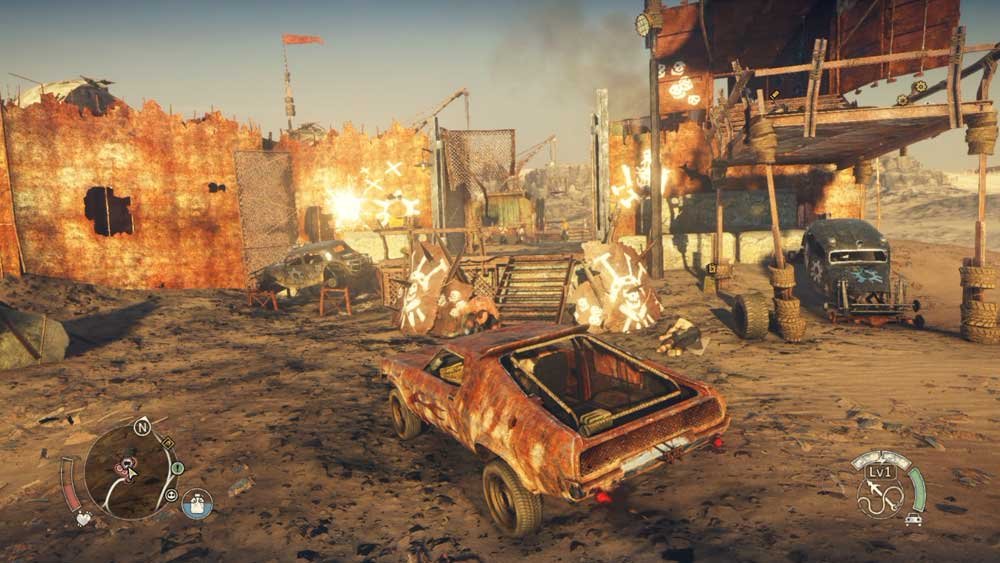
Every upgrade alters vehicle physics and combat tactics:
- V8 Engines: Vastly increases top speed and acceleration.
- Reinforced Armor: Increases durability at the cost of vehicle weight and handling.
- Harpoon & Flamethrowers: Allows surgical strip-downs of enemy convoys in high-speed chases.
The vehicular chases remain unmatched. Impact physics, twisting metal, and dynamic explosions turn every highway encounter into a cinematic sequence controlled entirely by your hands.
The Weight of Survival
On foot, the melee combat inherits the rhythmic DNA of the Batman: Arkham series, but with raw brutality. Max isn’t a superhero; he is an exhausted survivor. Every punch and counter-attack carries weight.
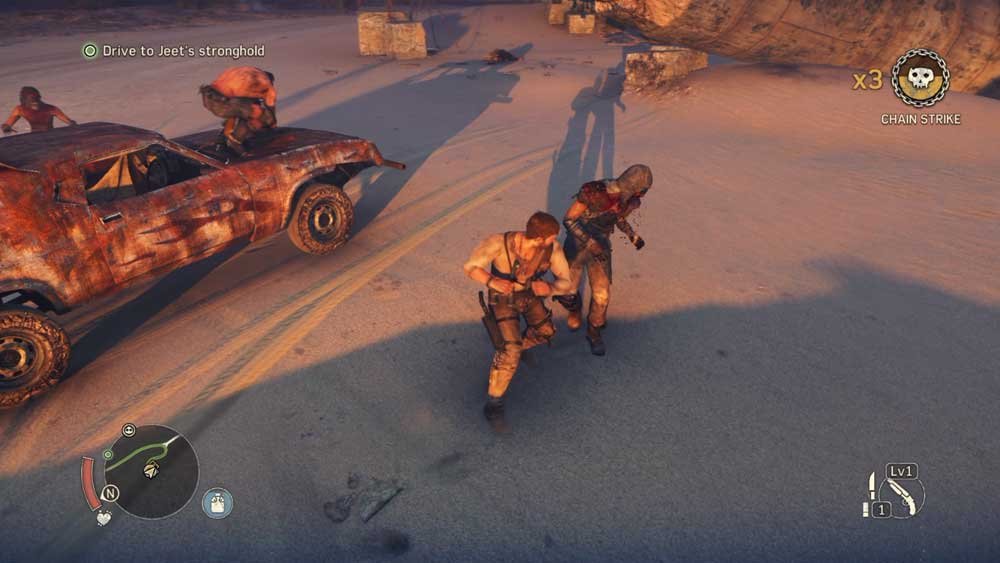
Resource scarcity—scavenging for water, canned dog food, and fuel—keeps players directly engaged with the environment. You don’t explore out of curiosity; you explore out of necessity.
A Legacy of Metal and Soot
Mad Max proves that an open world doesn’t need hundreds of generic icons if its core mechanics are rock-solid and its setting is impeccable. It delivers a focused, visually stunning experience that respects the player’s time. Years after release, it remains the definitive power fantasy for wasteland survival and highway carnage.