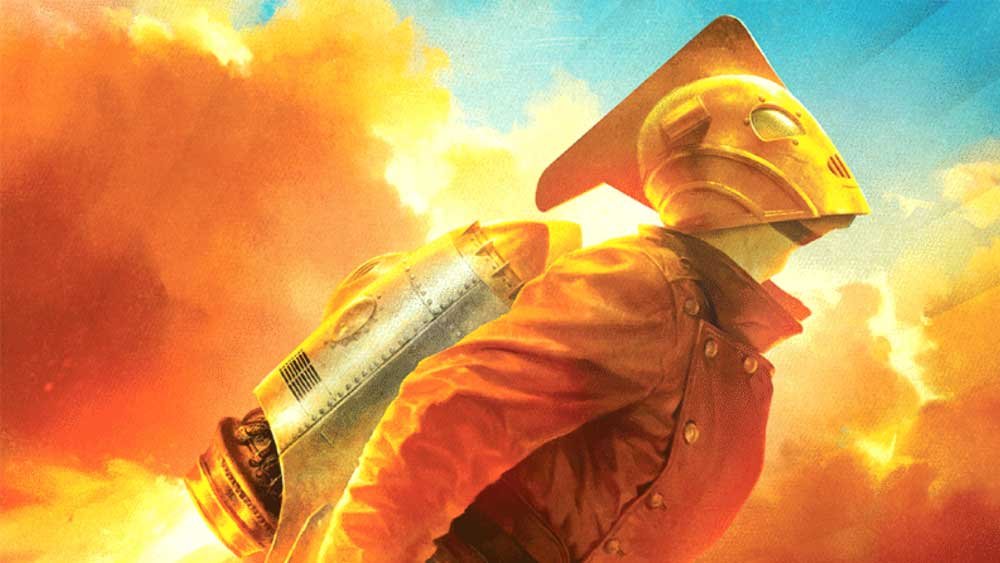
When Disney released The Rocketeer in 1991, the video game industry was undergoing a fascinating generational shift. The 8-bit Nintendo Entertainment System (NES) still held a massive global player base, while the 16-bit Super Nintendo (SNES) was just beginning to define the next visual standard. Capitalizing on the feature film, hero Cliff Secord landed on both consoles with radically different adaptations, alongside iterations on other platforms of the era.
The Limited Flight on the NES (1991)
Developed by Realtime Associates and published by Bandai, The Rocketeer for the NES hit store shelves in May 1991. The game leaned into a classic side-scrolling platformer template.
Playing as Cliff, players fought through six stages filled with gangsters, soldiers, and mutated bats using melee attacks and firearms. The main attraction was the iconic jetpack: activating it allowed free flight across the screen, though fuel was scarce and required constant management.
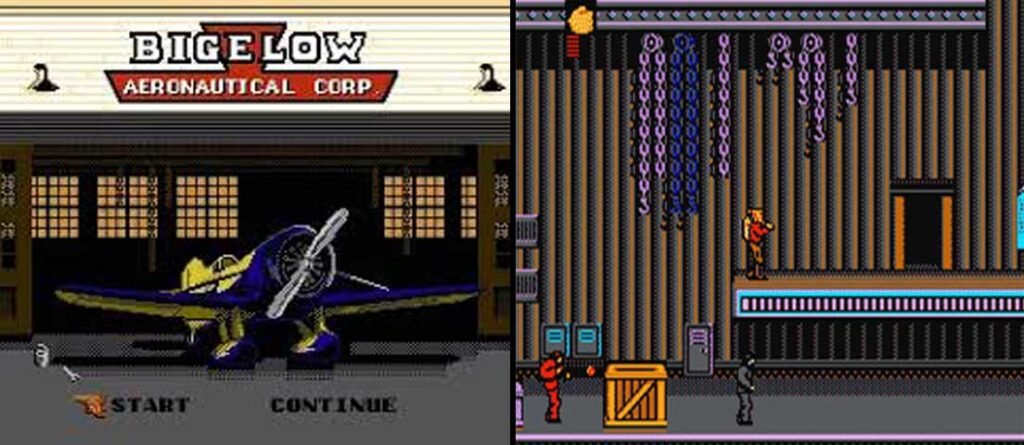
Despite featuring impressive cinematic cutscenes that re-told the film’s story between levels, the game was plagued by frustrating difficulty, unforgiving precision platforming, and confusing maze layouts that turned off many players at launch.
Turbulence on the Super Nintendo (1992)
The following year, Disney targeted the graphical power of the SNES with a version developed by NovaLogic and published by IGS. Instead of following the 8-bit platformer formula, the Super Nintendo title attempted a hybrid multi-genre experience.
The game opens with air races using a side-perspective camera—a design choice heavily criticized for inverted controls and punishing flight handling. Players who managed to clear the racing tracks unlocked top-down hangar shooter segments, free-flying shoot ’em up levels, and side-scrolling boss fights atop a zeppelin.
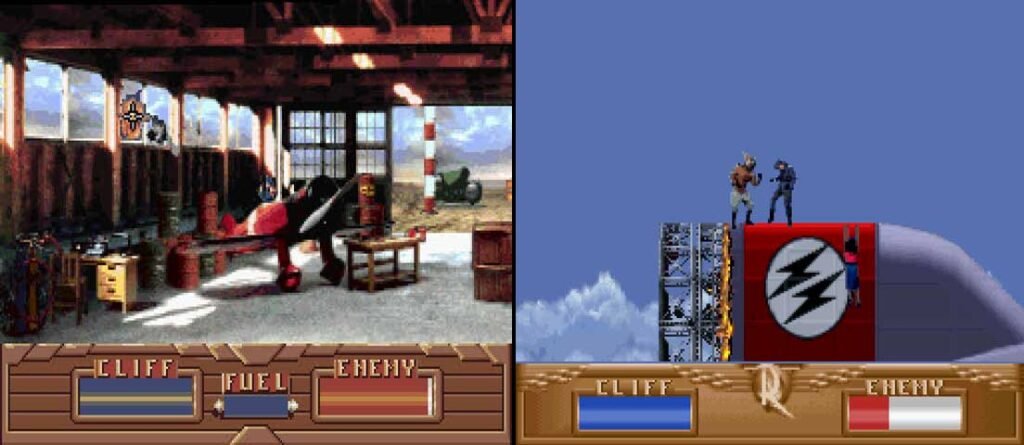
Despite its ambition to offer gameplay variety, clunky controls, generic environments, and repetitive audio led critics to label it one of the weakest film-licensed games on the SNES.
Beyond Home Consoles: DOS and Handhelds
For gamers who didn’t own a home console at the time, Disney licensed the IP to alternative hardware:
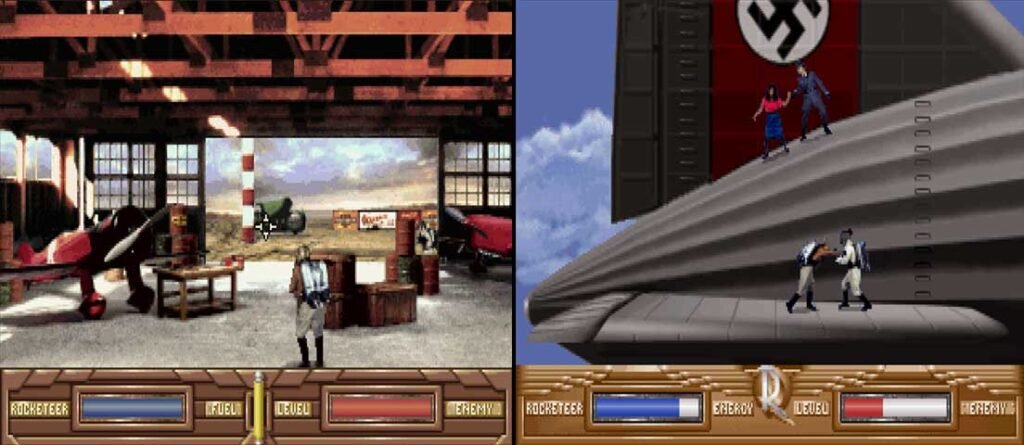
- PC (DOS): Developed by NovaLogic alongside the SNES game, the DOS version shared a similar structure of flight and shooting minigames. However, it featured technical support for the Disney Sound Source peripheral, an external audio adapter that significantly boosted digitized sound effects on early PCs.
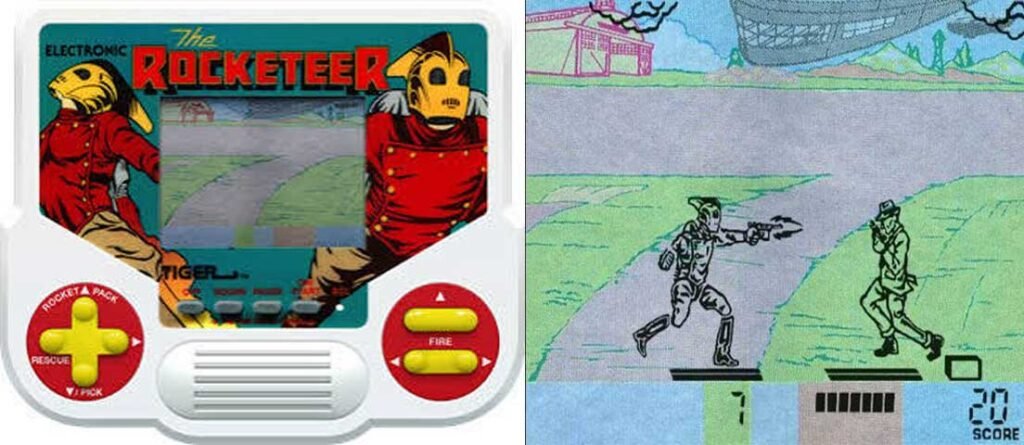
- Dedicated LCD Handheld: Also in 1991, The Rocketeer starred in a budget LCD handheld featuring fixed pre-rendered backgrounds—a popular hardware format right before the Game Boy completely dominated the portable market.
The Legacy
Much like the movie became a beloved cult classic over time, The Rocketeer video games stand as 90s time capsules from the golden age of movie tie-ins. While neither version achieved masterpiece status, they remain a fascinating historical record of how developers experimented with different genres to translate Hollywood magic into retro pixels.